The Big Read: Conspiracy theories, scientific misinterpretations, plain ignorance abound in COVID-19 infodemic
Advertisement
Singapore
The Big Read: Conspiracy theories, scientific misinterpretations, plain ignorance grow in COVID-xix infodemic
Singaporeans are susceptible to misinformation related to wellness and medicine, according to studies.

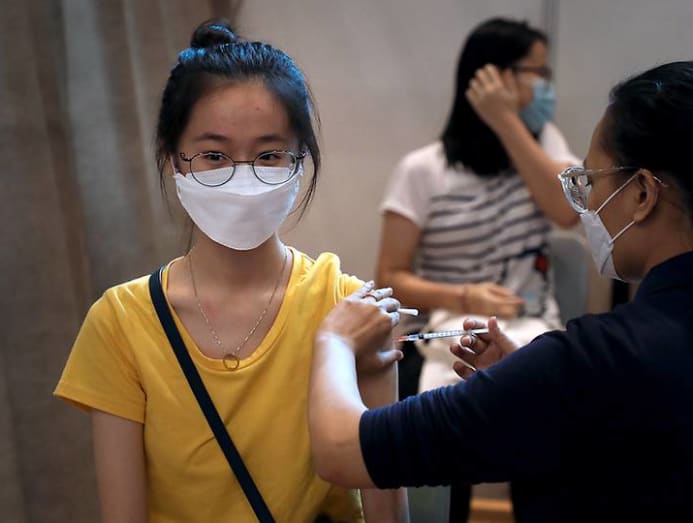
Amid the raging pandemic, misinformation about the virus has far more than serious implications than just damaged ties betwixt family and friends alone. (Paradigm: TODAY/Anam Musta'ein)
SINGAPORE: Mr Jake Goh, 51, a main of a private preschool, does non mind information technology when people label him every bit a conspiracy theorist or an anti-vaccine advocate.
"Whether I am a conspiracy theorist or not, fourth dimension will tell. I'm not trying to contend with people, I'm just here to offer an alternative view. If they make up one's mind to allow their children be jabbed, I can only warn them," said Mr Goh.
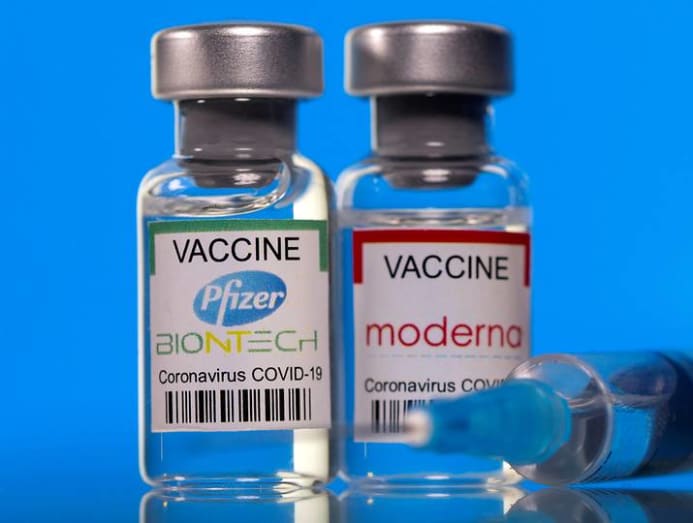
He runs two Telegram groups that discuss COVID-19 and vaccine injuries, each with thousands of members surfacing claims that the two authorised vaccines here — Pfizer-BioNTech and Moderna — have caused serious side furnishings such every bit stroke.
This is despite the fact that the Singapore Government has authorised the Pfizer-BioNTech vaccine for teens anile 12 to 15, with an expert commission and the Health Sciences Potency (HSA) assessing that the vaccine is safe and efficacious to utilize for this grouping.
"You tin gather a lot of cognition from the Cyberspace. Not everything the doctor says about vaccines is correct," said Mr Goh.
Mr Goh was not always so radical, having dutifully received flu jabs and other types of vaccines in the past. His transformation to become an anti-vaccine abet began last year during the pandemic, after reading articles about the drug industrial circuitous backside cholesterol research.
READ: Commentary: What'southward really behind fresh calls for investigations into COVID-19 origins
Nowadays, he gets his information from YouTubers who hash out health issues and have a broad following, as well equally from health journals that he reads to "get to the source" straight. After all, newspapers can be biased, he claimed.
His contrarian views have led to conflicts with people around him. His all-time friends removed him from their Facebook friends list because his anti-vaccine posts accept become "as well extreme" lately.
His sister, who lives in France where some 110,000 people accept died from COVID-19, often chides him for telling others non to get the jab when he has non seen firsthand how horrific the affliction can go outside of Singapore.
Merely he is immovable in his radical belief that COVID-19 vaccine evolution was rushed: "People say I believe in conspiracy theories, that I am an anti-vaxxer, that I am crazy. Oh aye, I get that a lot."
READ: 'Very small risk' of eye inflammation later 2d dose of mRNA COVID-nineteen vaccine - Singapore expert committee
Mr Goh is not the only i who has been socially distanced this fashion during the pandemic.
Artist Zelda, 34, has also seen her family ties and long-standing relationships strained or severed, as a issue of her wild and unsubstantiated claims — such every bit one proclaiming that vaccines are part of a money-grubbing conspiracy by the "global public health mafia".
First, information technology was with her father, who reads the newspapers and has been fully vaccinated, and whom she often had heated arguments with.
To her, official narratives from governments and experts obscure the truth, while alternative viewpoints from YouTube commentators deserve to be heard.
Then, the fallout likewise spread to her shut friends, whom she has known for decades, after she began sharing manufactures depicting COVID-19 every bit a lab-made bioweapon, and defending these articles when her friends challenged her.
Sick of arguing whenever Zelda shares manufactures about such theories on their mutual chat groups, some of her childhood friends have since shut her out of their lives. She declined to requite her full proper noun.
Wistfully, one of these friends said "She was always the first one to lengthened an statement. Only now she believes and then much in this that she's willing to just abandon friends over it."
READ: COVID-19 vaccination - Why some seniors are holding back, and how a little nudge can assist
Zelda recounted how voicing out these "alternative facts" during the pandemic had caused people effectually her to blow a fuse.
With her father, she no longer desires to talk over such theories at the dinner table. "We just say hi and good morn, that sort of thing. Information technology's much healthier this way."
Her information comes from dubious sources such as web streaming service Gaia, a paid service which hosts fringe content about alternative healing and conspiracies. The Us-based website features manufactures discouraging people to get vaccinated confronting COVID-xix.
On YouTube and Facebook, she would consume news from personalities who accept been associated with alt-right conspiracies, such equally David Wilcock and Ben Swann from the Usa.
READ: Commentary: Redpilling, rabbit holes and how far-correct credo spreads in online spaces
News from the mainstream media outlets are not part of her regular news diet, though some "inquiry" for her wild theories come from legitimate scientific journals with her ain estimation of what it all means.
"In this pandemic, it is quite sobering that the things that we believe in shape usa, down to the relationships that we have," she added, referring to how she is no longer on talking terms with some of her friends.
Equally Singaporeans, and people elsewhere, endure from an information overload regarding COVID-19 — where fact, fiction and half-truths grow — information technology takes patience and attempt to appoint people with strongly held beliefs that are based on falsehoods, said Ms Tin Pei Ling, Member of Parliament (MP) for MacPherson.
"(They) could have practiced intentions also. Simply if one shuts them out completely, it means there are no more than chances to give them the right facts, and does not give yous the opportunity to understand each other better," the chairperson of the government parliamentary committee for communications and data said.
Amidst the raging pandemic, misinformation about the virus has far more serious implications than just damaged ties between family and friends lonely.
If left unchecked, the scourge of malicious falsehoods and misleading one-half-truths could threaten to derail Singapore's pandemic strategy, especially its national vaccination practise that is withal underway, experts specialising in infectious diseases, public communications, policy research or national security said.
READ: POFMA directive issued to Facebook, Twitter, SPH Magazines over 'Singapore variant' of COVID-nineteen falsehood
But along with this progress, the number of incidents involving misinformation has also increased lately, some noted.
In the span of merely a month, there were three incidents nigh coronavirus-related falsehoods in which Singapore's imitation news law, the Protection from Online Falsehoods and Manipulation Human action (POFMA), had to exist invoked, starting from tardily Apr, noted Mr Ryan Lim, founding partner of digital management consultancy QED Consulting.
In that time, Google searches on COVID-xix vaccines had spiked, he added. Presently, "Vaccine Singapore" is the top most searched term here.
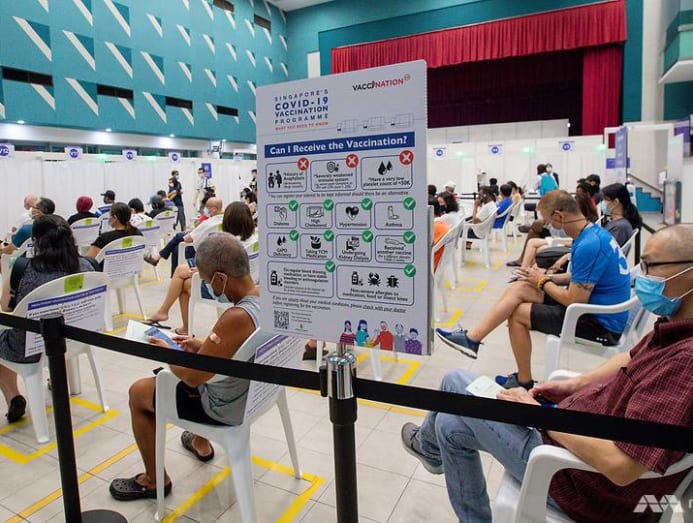
On Jun viii, Wellness Minister Ong Ye Kung acknowledged these issues playing out on social media that had cast doubt on the prophylactic of COVID-19 vaccines, claiming that messenger ribonucleic acid (mRNA) vaccines, such as those past Pfizer and Moderna, practice not work.
He was referring to a petition by 12 doctors, who had disagreed with the Government's decision to curlicue out mRNA vaccines, and also discouraged parents from vaccinating their children.
Eleven of the doctors afterward retracted their statement, and the authorities besides as a number of other infectious diseases experts were quick to reply to these vaccine claims.
"In fighting a relatively unknown and mutating virus, we have to steer carefully, constantly learning to navigate better, and improving on our approaches and processes. That, the Multi-Ministry Taskforce is fully committed to doing," Mr Ong said on Facebook.
READ: Pfizer-BioNTech COVID-nineteen vaccine safe for those aged 12 to 15, says committee in response to open letter past doctors
READ: 'No testify' inactivated virus vaccines more than efficacious against COVID-xix variants than mRNA ones - Singapore expert commission
While the viral state of affairs is nether control in Singapore soon and the vaccination programme is on runway, at that place is no telling what may come in the future when COVID-19 has become endemic, and when repeated booster shots could be needed and then.
Dr Shashi Jayakumar, head of S Rajaratnam Schoolhouse of International Studies' Centre of Excellence for National Security (CENS), warned that the COVID-19 situation could very well turn critical once again for Singapore.
And if information technology does, and if trust in the land and institutions is shaken as a event, malicious rumours, falsehoods, one-half-truths and misinformation would be dorsum to plague Singapore'due south pandemic response once again.
"We are starting from a good position now. Merely hypothetically, if there is moving ridge later wave of infections, and lockdowns after lockdowns are needed, that would be the fertile ground for malicious misinformation to proliferate," he said.
READ: Commentary: Forwarding a WhatsApp message on COVID-xix news? How to brand sure you don't spread misinformation
FACT, FICTION AND THE UNKNOWN
Tracing the roots of misinformation to their sources would likely reveal one of several motivations behind its spread: These include political and ideological reasons, commercial profit, mischief, just as well cases of genuine misunderstanding, said experts.
QED'southward Mr Lim said: "Such false content tends to thrive in an environment with a high degree of anxiety and ambivalence. The successful spread will create a roughshod circle that encourages more of such content to be created."
Such anxiety was the case at the beginning of the pandemic on January 23 last year, when Singapore announced its outset imported example of the novel coronavirus, which originated in Wuhan, China.
At a time when people were closely watching the developments in Prc, where several people had died from the new disease, a mail service past a user in the HardwareZone online forum claimed that a 66-year-sometime man had died from the virus on Jan 26.
By then, Singapore had counted just its fourth confirmed case of COVID-19.
This fake claim past the user named Potato_salad was chop-chop dismissed past the authorities the next morning, when POFMA was used. The relatively new law had come into strength simply four months earlier.
A general correction direction was issued to SPH Magazines, which operates the forum, to publish a correction notice to its Singapore users to inform them of the falsehood.
To date, POFMA has been used in xiv separate instances concerning COVID-xix-related falsehoods.
But the amount of misinformation existence spread during the pandemic is far more numerous than those flagged by the fake news law, which on its ain, is bereft to stop people from assertive these claims, said experts.

Associate Professor Alton Chua from the Wee Kim Wee Schoolhouse of Communication and Information at Nanyang Technological Academy said that while POFMA is designed to nip the spread of falsehood in the bud, it is no silver bullet when it comes to shaping beliefs.
"Nigh falsehoods on the COVID-xix virus and vaccines that are swirling effectually are what is known equally dread rumours. Unlike wish rumours which invoke promise and optimism, dread rumours spell doom and gloom," he said.
People tin besides endure from confirmation bias, choosing to translate information in a way that conforms to their existing beliefs, he said. That ways that those who are sceptical about COVID-nineteen vaccines, for case, tend to exaggerate reports they come across nearly postal service-vaccination complications.
"Hence, any dread rumours nigh COVID-nineteen vaccination will be uncritically lapped up. The mindset of 'better be condom than sorry' is ironically what compels these people to share untruths," he said.
Citing a recent small-scale-scale research conducted past his graduate student, Assoc Prof Chua said a bulk of respondents were balky to sharing misinformation related to COVID-19 because they were able to discern that the messages were of a dubious nature and that information technology would be unhelpful to share them with people.
When probed further, POFMA did not emerge as a deterrent factor at all amongst the respondents, he added.
"In the fight against online falsehood during this pandemic, information literacy and educational activity remains an important anchor," Assoc Prof Chua said.
(Are COVID-xix vaccines nevertheless effective against new variants? And could these increase the take chances of reinfection? Experts explain why COVID-xix could become a "chronic problem" on CNA'southward Heart of the Matter podcast.)
FAST-EVOLVING PANDEMIC CONDUCIVE FOR MISINFORMATION
When information technology comes to COVID-nineteen, withal, the scientific nature of the coronavirus and vaccines renders it hard for people to brand their ain conclusions about the science. Thus, it is key that people can turn to experts with the right credentials and experience to help them sort fact from fiction.
What makes this pandemic a perfect storm for misinformation to be reinforced and spread is because it concerns a new virus, fast-emerging viral strains, and cut-edge vaccines that will take time to fully understand them.
And with science still playing catch-up with an evolving affliction, there is a danger that misinformation can make full in the void and could even foster mistrust of scientific methods.
One mutual example cited by some conspiracy theorists was Singapore's insistence at the outset of 2022 that face up masks should exist used only when a person was feeling unwell or showing symptoms.
The guideline after inverse to require face masks to exist worn at all times, when scientists discovered the possibility of asymptomatic spread of COVID-19 and the World Wellness Organisation also switched its opinion on confront masks.
To some, the episode meant that trusting one's instincts is better than listening to what the authorities say.
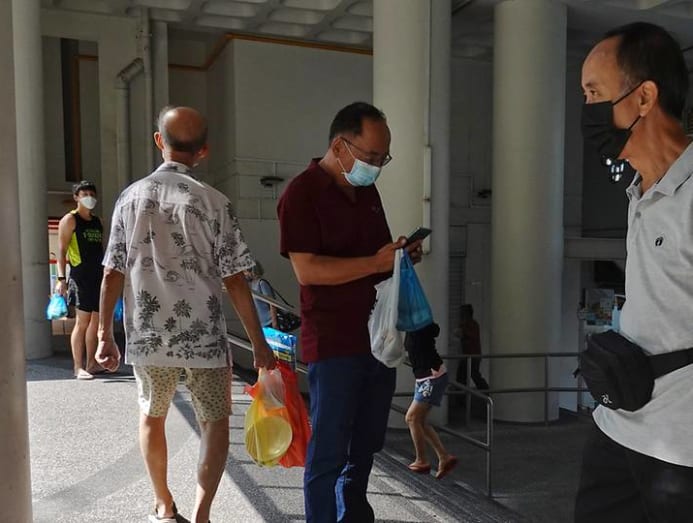
Zelda said she feels frustrated watching government officials speak about the safety measures needed: "I recall they are trying their best. But equally a human being, do I need to rely on an external party for a decision almost my ain life? My answer is no."
Asked well-nigh this, Dr Ballad Soon and Mr Shawn Goh from the Plant of Policy Studies (IPS) at the Lee Kuan Yew School of Public Policy said that a study they conducted concluding year had institute that false data relating to wellness and medicine was second out of 11 topics that were virtually oft believed past Singaporeans.
Falsehoods near international and strange affairs came out tops in the study.
In an email interview, they said: "There may be 2 possible reasons for this. First, wellness misinformation is perceived to have a direct impact on people's lives. Negativity bias is as well at play as we are evolutionarily hardwired to respond more strongly to survival threats.
"Second, navigating the online space for credible medical information requires not merely digital literacy, but too scientific literacy, which many people may not possess sufficiently."
FALSEHOODS ON VACCINE SAFETY
Dr Shortly and Mr Goh warned that they accept observed increasingly active forms of "online mobilisation" among people who circulate unverified information or mistruths about COVID-19 vaccine condom and its purported side effects.
Examples include people making allegations that good for you individuals had experienced medical complications or died afterwards receiving their vaccination, and sharing photos of severe rashes and swelling that they claim to be vaccine-induced.
The HSA reported in May that out of the 2.2 million vaccine doses administered until mid-April 2021, there were 95 reports of serious agin effects such as anaphylaxis, but no deaths take been linked to the vaccines then far.
POFMA was used against opposition fellow member Goh Meng Seng who had published several faux statements implying that the vaccines had caused or substantially contributed to death or stroke.
READ: POFMA correction directions issued to Goh Meng Seng, Singapore Uncensored over COVID-19 vaccination falsehoods
READ: Facebook says it removed Goh Meng Seng's posts equally they violated its policies on COVID-19 claims
Despite these clarifications from the regime, the unproven theory that vaccines lead to death continue to pervade the online space in Singapore. The IPS researchers noted that some people who engage in such content accept come with a range of strategies.
"They include setting upwardly Facebook groups to share misinformation, and creating Google forms to solicit stories and cases of vaccine injuries, ofttimes without the total context. Mobilisation is also taking place in closed-group platforms such as WhatsApp and Telegram.
"The stop-to-stop encryption technology that undergirds instant messaging apps hinders timely misinformation detection and debunking," they said.
Their study had also noted that instant messaging platforms and social networking sites were the summit two types of media where people nearly frequently encountered and believed in false information.
Mr Jake Goh, the private preschool principal who runs one such group on Telegram, claimed that its purpose is to create awareness considering "transparency is needed in public health", so that the public tin make an informed decision most vaccines.
"We are filling the gap that the Ministry building of Wellness and all the relevant authorities are not providing or not announcing," he said.
When asked if he or the other moderators of the platform curate the data shared in the Telegram group, Mr Jake Goh insisted that it is not possible for them to fact-check every postal service.
"Aye, I am of class concerned if misinformation seeps into the group. So if they mention things similar (Donald) Trump or Bill Gates, we will remove the posts. But in that location is no fashion the layman can know what is correct or not, so nosotros have to learn from everywhere, and read widely.
"We are just in that location as a sounding board to surface alternative views," he said.
He claimed that his vaccine scepticism is backed by his own research, having read through the trial data and reports of existing vaccines, and concluding that the vaccine trials were non thorough enough.
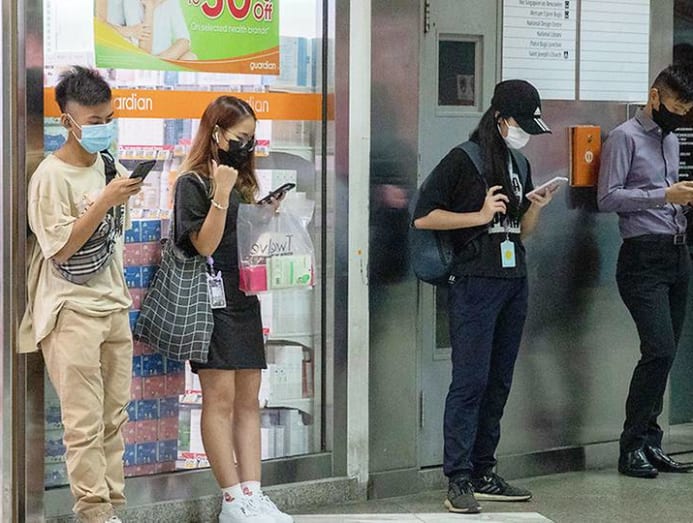
On this, IPS' Dr Soon and Mr Shawn Goh said that information technology is oftentimes the case that those who go the extra mile to wait up information on vaccine efficacy may terminate up reinforcing their own behavior.
"Their fake beliefs may be reinforced when they draw invalid conclusions from scientific studies without a full appreciation of their robustness, or if they plow to 'scientific journals' that are not actually recognised by the expert community," they said.
Referring to these online mobilisation efforts besides equally the petition against mRNA vaccines by the 12 doctors, Dr Soon and Mr Shawn Goh added: "Without intervention, these online spaces permit anti-vaccine views to fester and proceeds perceived legitimacy as they grow in size."
READ: Commentary: Misinformation threatens Singapore'southward COVID-xix vaccination programme
ESTABLISHING LINKS BETWEEN VACCINES AND DEATHS: WHAT PUBLIC NEEDS TO Empathise
When asked why scientists cannot categorically land that COVID-19 vaccines practice not cause expiry in order to lay these mistruths to residual, experts stressed the importance in trusting the scientific method — that conclusions can but be reached afterwards observations, experiments and measurements are done.
Professor Teo Yik Ying, dean of the Saw Swee Hock School of Public Wellness, said that there is a clear difference between proof of absence and the absence of proof.
Explaining, he said it is one thing to outcome a statement such every bit "in all the participants in the clinical trials, nosotros take not observed a expiry consequence", as opposed to "this vaccine does not cause death in anyone who takes it".
"There is a need to systematically review the evidence of any mortality event that is suspected to be linked to the vaccine to sympathise whether taking the vaccine caused the fatality," he added.
READ: Message claiming autopsy performed on COVID-xix patient and alleged changes in treatment protocols untrue - MOH
READ: 81-yr-old man died of center disease, not COVID-19 vaccination complications - MOH
"This mechanistic link is indeed a challenge to constitute properly. This is why regulatory agencies worldwide, not just in Singapore, have been monitoring agin events that are purportedly linked to the vaccines, and so the data and cognition tin be accrued, shared internationally, and reviewed jointly, in order to understand the real-world bear on of the vaccines."
Because proper scientific discipline takes time, it thus falls to a close partnership among responsible scientists, responsible media and trusted public agencies to be agile in responding to faux news in the concurrently, he said.
All 3 parties are essential to this endeavor, since no single stakeholder holds all the cards needed to combat fake news.
The media and fact-checking organisations, for case, do non accept the complete information needed to deal with complex scientific problems, just they should have access to trusted experts and policymakers to dribble the information for the public.
This also means people should be wary of scientists who are not properly informed themselves, besides equally irresponsible ones who could have been generating and spreading misinformation, said Prof Teo.
"While (stopping the apportionment of faux news) appears to be additional workload to people who may already be busy fighting the pandemic, it is just equally important in the overall pandemic control, particularly if the fake news will brand people human action or react in a certain way that causes harm to themselves or others in the community," he stressed.
ORCHESTRATED DISINFORMATION CAMPAIGNS
Another aspect of misinformation concerns the threat of state-led disinformation campaigns, in the light of efforts by some countries to promote "vaccine affairs".
Red china, for instance, is donating vaccines to regions where its contest with the US for influence is intense, reported Reuters news agency. The Usa has also announced its plans to donate 500 million doses of vaccines to the developing world, including in Asia.
But could vaccine affairs besides take on a more aggressive stance, such equally by resorting to disinformation campaigns to ignominy another country's vaccine? Are such efforts already underway in Singapore?
It is possible, though cartoon a link between a falsehood and a state-originated disinformation campaign is difficult, said Ms Dymples Leong, a senior analyst at CENS.
She noted that there has been misinformation revolving not just around vaccines in full general, merely also certain vaccines in item.
READ: Commentary: Sinovac use sparks new spat in politically carve up Thailand
"One example (of misinformation) is the claim that mRNA-based vaccines are ineffective confronting COVID-19 variants, or claims which encourage people to back up one vaccine over the other due to reasons such as vaccine nationalism," said Ms Leong.
On social media in contempo weeks, comparisons of efficacy have been made between mRNA-based vaccines which are developed in Western countries, such as Pfizer-BioNTech and Moderna, and the virus vector and inactivated virus vaccines, such as Russia'southward Sputnik Five and Prc's Sinovac and Sinopharm.
Some doctors, including Dr Oon Chong Jin, a private cancer specialist who championed hepatitis B vaccination in Singapore, issued statements that circulated on social media claiming that inactivated virus vaccines such as Sinovac are more constructive against COVID-xix variants, whereas mRNA-based vaccines were "useless" against these new strains.
Dr David Lye, the director of infectious disease research at the National Heart for Infectious Diseases, rebutted these statements on Monday, stating that mRNA vaccines were the most effective confronting the variants and in that location were hardly any data about this for Sinovac. He also spoke out against doctors who "quote dubious international experts and inquiry potentially misleading the public".
The expert committee on COVID-19 vaccination nether the Ministry of Wellness has as well refuted the online claims. It pointed out that Pfizer-BioNTech and Moderna mRNA vaccines have in diverse studies "consistently shown to be highly efficacious, at effectually 90 per cent, especially in protecting confronting severe COVID-19 disease and hospitalisation".
READ: Commentary: How COVID-19 vaccines are being weaponised as countries jostle for influence
These were demonstrated in various trials and actual whorl-outs in the United States, United kingdom of great britain and northern ireland and State of israel. Emerging data continues to bear witness that the mRNA vaccines are likewise effective confronting the B1617 variant. For instance, a study in the Uk showed that two doses of the Pfizer-BioNTech mRNA vaccine confer about 88 per cent protection confronting symptomatic COVID-xix even with the delta or B16172 variant.
The term "vaccine nationalism" was likewise used by Senior Minister Teo Chee Hean, who is also Coordinating Minister for National Security, in a Facebook mail service terminal week.
Vaccine nationalism was the meridian concern amongst volunteers at a come across-the-people session, and whether the competition among countries will deject scientific and medical facts and what to believe amid all the noise that is suddenly being created, wrote SM Teo.
He said in response to a Facebook user comment: "It is not W or East, but science and facts. The question is whether the data provided for evaluation is sufficient for HSA to clear it for general utilise past Singaporeans, to make sure information technology is rubber for us and our families."
READ: Commentary: Prc faces huge challenges in tackling COVID-xix misinformation on social media
Asked whether vaccine geopolitics is at play in Singapore, CENS' Dr Jayakumar said there is no dubiety that vaccine diplomacy is now an important "calling bill of fare" of national soft power, so there are tensions whenever that soft ability is being undermined.
He said that messages of indeterminate origin accept been bandied around on social media creating fear well-nigh certain vaccine types, though he agreed with Ms Leong that it is non easy to conclude that these are state-led efforts.
Nonetheless, Singapore is also beingness closely watched for what vaccines information technology buys and uses for its national vaccination programme, he added.
"Worldwide, nosotros do run across sure countries trying to burnish the credentials of certain vaccines. Around the edges of this effect is that Singapore is seen every bit an alphabetize customer, that nosotros are non just any state but a country with acute sentence.
"It is universally recognised that when we cull sure vaccines, questions may be asked as to why we did not choose another one," said Dr Jayakumar.

GREATER TRANSPARENCY, ENGAGEMENT THE Antitoxin?
With such a broad spectrum of motivations behind the spread of misinformation, tackling pandemic falsehoods is a challenging job for any government, said experts.
In the United Kingdom earlier this year, when it was facing a surge in COVID-19 cases caused by a mutant strain, the scourge of misinformation reared its ugly head during the country's third national lockdown.
Anti-vaccination and anti-lockdown protesters, also as demonstrators who falsely believed that COVID-19 was a hoax, concluded up picketing hospitals and verbally abusing exhausted doctors, teachers and other frontline workers, reported British news outlets.
And in the United states, misinformation about the origins of COVID-19 arguably contributed to a rising in hate crimes towards residents of Asian descent, prompting legislators to expedite a COVID-19 Detest Crimes Deed aimed at stopping these attacks.
This is why Singapore cannot ignore malicious falsehoods, lest they take concord in order, said those interviewed.
Ms Tin, the MacPherson MP, said: "The Regime is faced with the responsibility to incorporate and control the virus in the fastest fourth dimension possible to reduce the damage to our people to the minimum possible.
"Later on all, at the national level, if there are people who are spreading misinformation, discouraging people from receiving the vaccination or from complying with the condom rules, then you can imagine how much it will tiresome down our pandemic response or even derail it."
READ: Commentary: Worries over rising COVID-19 cases are fuelling racially charged comments
Fortunately, Singapore is not faring too bad when information technology comes to managing misinformation, said Assoc Prof Chua from the Wee Kim Wee School of Communication and Information.
"When the vaccination programme in Singapore started early on this year outset with senior citizens, there was a palpable sense of apprehension. Information technology didn't help that there were cases of mail-vaccination deaths reported overseas, albeit rare," he recalled.
But these myths were quickly dispelled through the mainstream media and with the assistance of infectious diseases experts, said Assoc Prof Chua. Television commercials and public service campaigns, some of which featured Gurmit Singh's iconic Phua Chu Kang character, drove home the importance of vaccination.
CENS' Ms Leong pointed to the comic series "The Covid Chronicles", by the National Academy of Singapore's Yong Loo Lin School of Medicine and illustrator Andrew Tan, as a skilful instance of explaining the science of Covid-19 in an engaging format.
IPS' Dr Presently and Mr Goh said of these efforts: "Constructive communication of science is needed to build resilience against vaccine misinformation and foster public trust in scientific discipline.
"Public messaging should be clear and elementary, for case by stating that vaccines are safety and constructive, and highlighting scientific consensus on the matter helps inoculate people from being swayed by misinformation that merits otherwise."
Dr Jeremy Lim, from the Saw Swee Hock School of Public Health, who often comments on public wellness policy, said he is sympathetic to those with culling views. Simply he also noted that disagreements betwixt doctors and professionals can still be cordial, agreeing to disagree.
That said, transparency must also come up from scientists, doctors, public health professionals as well, considering that the nature of novel diseases means there will exist express data and feel to go by.
"In public communications, information technology'south important to share views and recognise alternative ways of interpreting data, every bit well as exist articulate why one disagrees with sure points made," said Dr Lim.
While some may argue that culling views have been shut out of the official narrative, Singapore's public communications strategies more often than not take allowed national vaccination have-up charge per unit to maintain a good for you trajectory, said those interviewed.
Subsequently all, the proof is in the pudding, they said.

But at the private level, when confronted with someone with wildly differing views that are based on falsehoods, Ms Can urged people to non dismiss them and instead mind closely to their concerns.
"Sometimes that can be very difficult to do and it can be an emotional experience," said Ms Tin. "Only we simply have to endeavour."
And sometimes, this endeavour pays off, as the experience of retired tuition teacher Mrs Chia W Thousand, 68, shows.
Speaking in Mandarin, she said that for the longest time, she did non want Western vaccines because YouTube videos had convinced her that they were more dangerous than the "traditional" Chinese vaccines and would change her DNA.
One bulletin sent from a friend even falsely ventured to say that people who took the vaccine would dice within two years.
"I didn't go look for these videos ... it was my friends who sent them to me," she said when asked about her news consumption habits.
Her three sons kept bugging her to go jabbed for her ain rubber, telling her that the videos she watched were not legitimate news sources. She also believed that the Government may restrict the movements of unvaccinated persons.
Then in Apr, she overcame her fear of the mRNA vaccine and headed to the vaccination centre to get the Pfizer jab. Mrs Chia grew worried when she got a high fever after her 2d dose in May.
The fever subsided apace the next mean solar day and life returned to normal. Mrs Chia nonetheless slightly worries about the long-term side effects that the videos have warned her near.
Merely in the end, her fears about being jabbed were much ado about nada. "It wasn't a big bargain after all," she said.
Editor's note: An earlier version of the article stated that the comic serial "The Covid Chronicles" was illustrated by Mr Sonny Liew. That is incorrect. It was illustrated past Mr Andrew Tan. We are sorry for the fault.
BOOKMARK THIS: Our comprehensive coverage of the coronavirus outbreak and its developments
Download our app or subscribe to our Telegram channel for the latest updates on the coronavirus outbreak: https://cna.asia/telegram
For more news like this, visit todayonline.com

Recent Searches
Trending Topics
hiltonprudernithis.blogspot.com
Source: https://cnalifestyle.channelnewsasia.com/singapore/big-read-conspiracy-theories-scientific-misinterpretations-plain-ignorance-abound-covid-19-infodemic-291086
0 Response to "The Big Read: Conspiracy theories, scientific misinterpretations, plain ignorance abound in COVID-19 infodemic"
Enregistrer un commentaire